
Only a few days ago, I was out on the Somerset Levels at the Somerset Wildlife Trust’s Westhay Moor nature reserve. There’s a cluster of large reserves within an area known as the Avalon Marshes. Being situated fairly close, I have visited these reserves a number of times previously, usually to see the impressive range of wetland bird species. Much of the land in the area was used during the 20th century by the peat-cutting industry, which still operates, albeit controversially nearby. However, there was a small area that I was able to see when I was visiting Westhay that hadn’t been used by the peat industry much at all, and according to a reserve warden, was largely unchanged to how it had been for centuries.
As a result, I thought that this little area, no bigger than a typical farm field in the region, could provide interesting insight into the nature of the area before people began to improve it for human use. Upon seeing this little patch, one thing was immediately apparent to me, young trees could be seen punching through large areas of the peaty soil-the whole nature of the habitat was in a constant battle against the forces of natural succession. While the conditions of the soil appeared unfavourable for many common fast-growing plant species, birch and even oak were quickly forming little patches all over the area. In relatively little time, one could expect such trees to smother the peat bog, drying it out into some kind of scrubland habitat. While scrubland habitats certainly have their merits, it begged the question as to how thick layers of peat developed here in the first place.
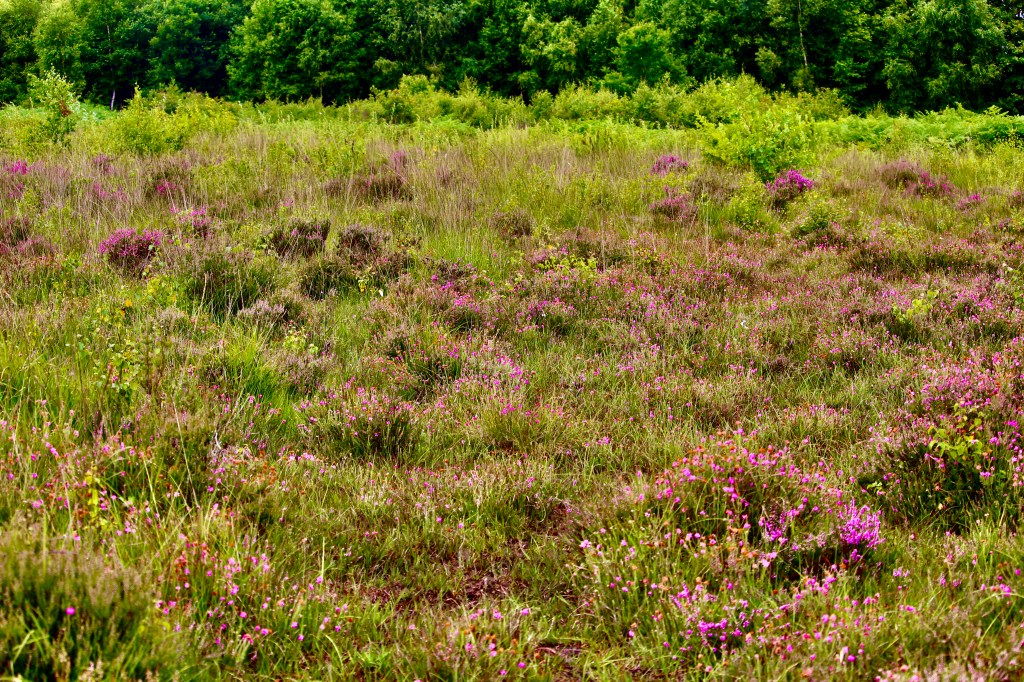
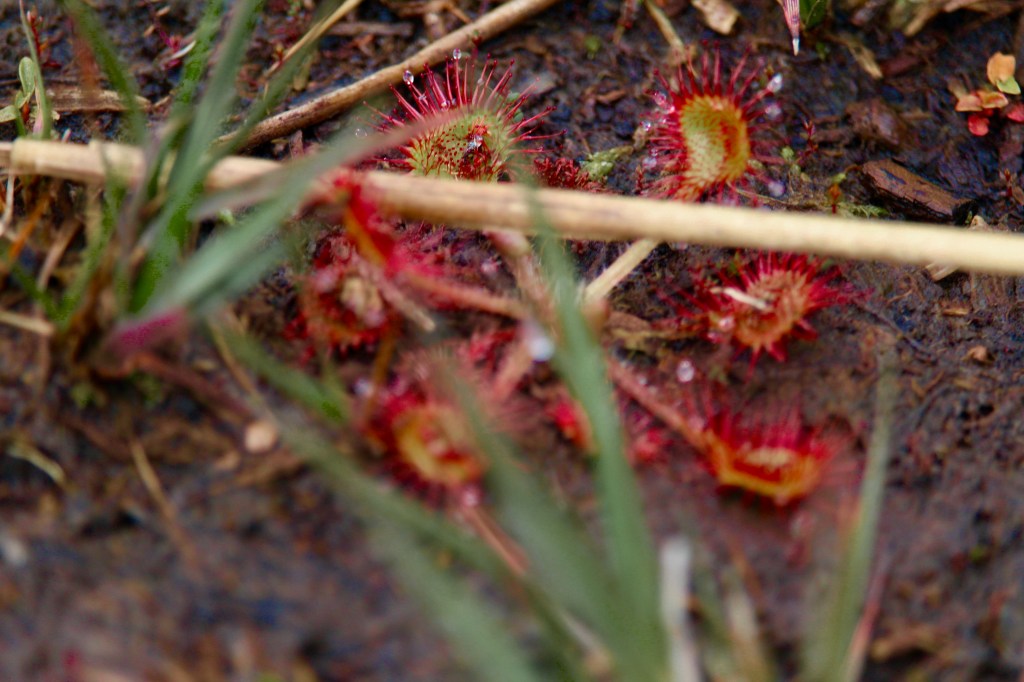
Pondering this question, I was also surprised by the strange bouncy attributes of the damp areas of peaty soil, which conveyed vibrations over large distances like an elastic material. Among the heather, one could find the bizarre “carnivorous” plants, round-leaved sundews, growing low down to the ground, which supplement their nutrition with insects much like the more charismatic Venus Flytrap. This unusual habit of the sundews is testament to the harsh growing conditions within “healthy” peat soils.
One explanation as to how the habitat developed in the first place could be due to a combination of natural grazing pressures and wetter soil conditions, that stifled the growth of trees and promoted the growth of Sphagnum moss, leading to the development of peat over centuries or possibly millennia.
The issue today for such areas, is that drainage by people has disrupted the retention of water that allowed peat bogs to develop in the first place and as a result on this particular site the Somerset Wildlife Trust has to do some intervention to stop the peat from drying out and the associated flora from vanishing. Overall, I look forward to seeing how peatlands are managed as time progresses and how they fare against the increasingly volatile weather conditions brought on by climate change in the years to come.
 britishnature.blog
It was such an interesting visit with sightings of birds Id never seen before.
Sent from Mailhttps://go.microsoft.com/fwlink/?LinkId=550986 for Windows
LikeLike